9.4/10 Based on 130,808 reviews
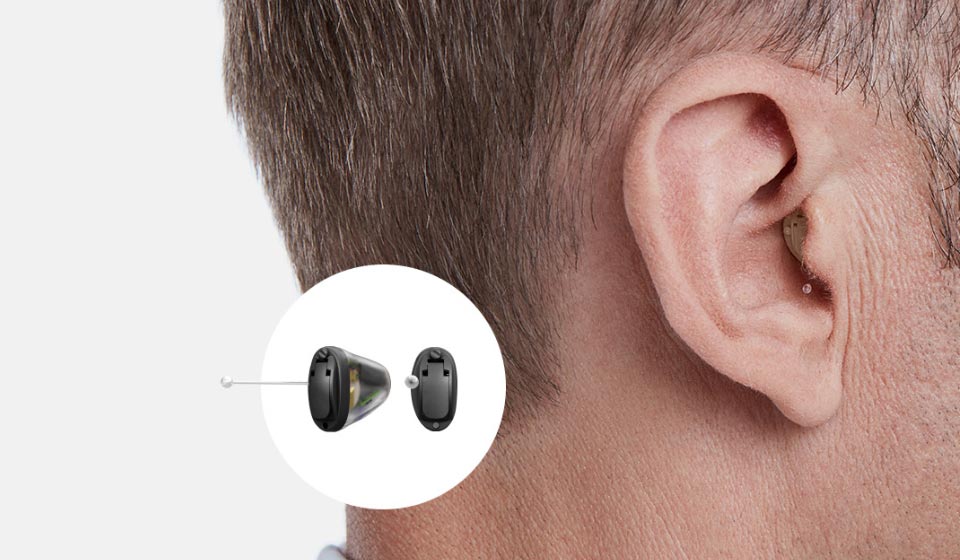
Man’s ear with discreet invisible hearing aid inserted and a close-up view of the device in a white overlay.

Invisible hearing aids

Modern hearing aids are more discreet than ever. In fact, there are now hearing aids available which are almost invisible to the eye. Learn how these miniature hearing aids provide both a discreet look and a high-quality listening experience.

Group of people icon in blue and green
Helped over
250,000 Australians
calendar icon with the number 60
60-day
money-back guarantee^
A blue and white schematic illustration depicts an in-ear hearing aid with a pull tab on the left and a circular detail on its surface, set against a black background.
Advanced
technology

What are invisible style hearing aids?

Invisible style hearing aids are designed to sit deep inside the ear canal, making them one of the most discreet hearing solutions available. Many people exploring discreet hearing aids are simply looking for something subtle that doesn’t change how they look. 
If appearance matters to you, it’s worth understanding how invisible style hearing aids work, who they suit, and what trade-offs may come with their smaller size. 

Invisible style hearing aids are a type of in-ear hearing aid that fit entirely, or almost entirely, inside the ear canal. Because they sit deeper than traditional styles, they are much less noticeable when worn. 
They are custom-made to match the shape of your ear canal. This personalised fit helps with comfort and stability. Most invisible styles are suitable for mild to moderate hearing loss, depending on ear size and anatomy. 

Types of invisible style hearing aids

While all are designed to be discreet, there are subtle differences in depth and size: 

  • Completely-in-Canal (CIC) – Sits inside the ear canal and is generally difficult to notice from the outside. 
  • Invisible-in-Canal (IIC) – Fits even deeper, making it one of the smallest hearing aid styles available. 

The smaller the device, the more limited space there is for features like manual controls, connectivity to other devices such as compatible phones, or longer lasting  batteries. Below we go into more detail into the benefits & types of invisible style hearing aids. 

Types of hearing aids

A woman wearing noise-reducing headphones performs a hearing test in a hearing clinic setting, holding a response button. The background includes greenery and an unfocused indoor environment. No text is present.

Book a FREE* hearing check today

Use the form below or quote the 'Audika' website when booking your appointment. All fields required.
Question 1 of 1
How do you prefer to book?
Book online

What is the best invisible hearing aid?

One of the smallest invisible hearing aids is the invisible-in-the-canal (IIC) style. It fits completely inside the ear canal.

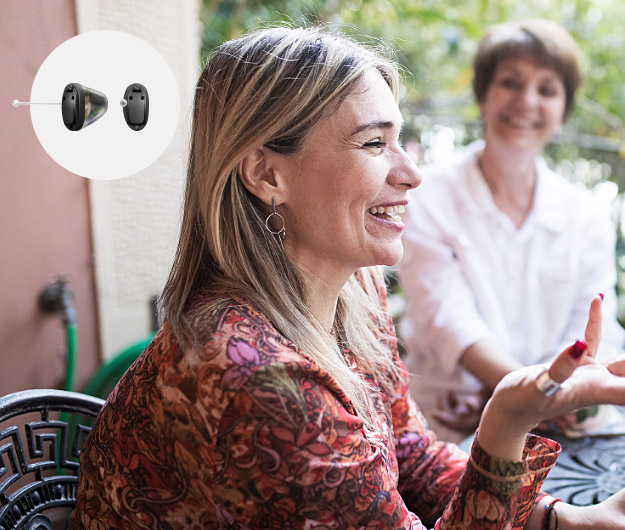
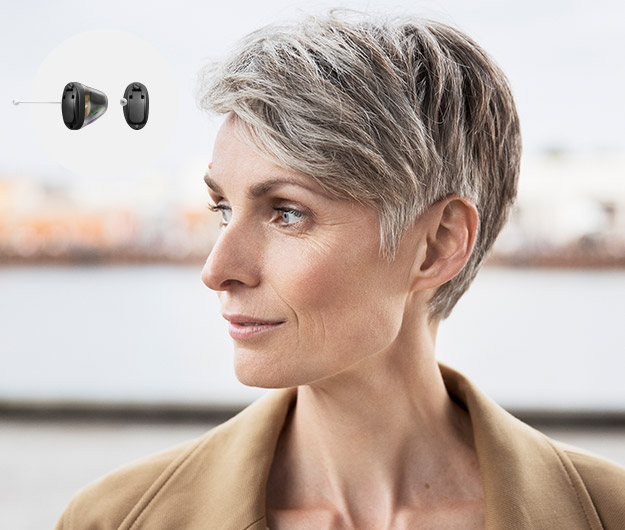
The Oticon Opn IIC is invisible in 8 out of 10 users' ears, offering excellent sound quality - without compromising on the latest digital technology.

Try Oticon Opn IIC In-the-ear hearing aids

Invisible hearing aids: advantages and disadvantages

Several factors determine whether invisible hearing aids are suitable for you. The level of your hearing loss, the shape of your ear canal and your personal preferences about hearing aids are all factors, that should be considered. 

Below you can get overview of the most common pros and cons of invisible hearing aids.

 Advantages Disadvantages 
Small, discreet style  Shorter battery life 
Less likely to pick up wind noise  Controls are harder to see and feel 
More natural sound experience  Not suitable for all ear canal shapes 
No external tubes / wires Challenging to handle for those with dexterity issues  
Custom-fitted (more comfortable for most users) No binaural coordination possible between your two hearing aids 
  No Bluetooth® connectivity available
  Not available with rechargeable batteries 

Benefits of Invisible Hearing Aids 

People often choose invisible hearing aids because they: 

  • Sit discreetly inside the ear 
  • Feel lightweight and secure 
  • Use the ear’s natural shape to help direct sound 
  • Offer modern sound processing in a compact design 

For many, the biggest benefit is confidence. The device is there when you need it, without being the first thing others notice. 

Are Invisible Hearing Aids Right for You? 

Invisible hearing aids are not automatically “better.” They are simply designed for a specific set of priorities. 

They tend to suit people with mild to moderate hearing loss who value discretion above all else. Ear canal size and shape also plays a role. Very small or narrow canals may not accommodate the smallest devices comfortably. 

Lifestyle matters too. If you regularly adjust settings manually or stream audio often, slightly larger in-ear hearing aids may offer more flexibility. 

Your hearing is our expertise


Our comprehensive FREE Guide to Hearing Health provides information on the various types of hearing loss, their causes, possible management options, what to expect from a hearing assessment, and much more including:

  • Audika’s commitment to the highest level of customer service
  • Helping a loved one with hearing loss
  • Types of hearing aids
  • Funding options for people needing financial support
Free guide to hearing health displayed on a tablet screen with the text ’Your hearing is our expertise’ and the Audika logo.

We offer discreet hearing aids from award-winning brands

FAQ about invisible hearing aids

Mona Hemsley wearing a red shirt against a light green background
Mona Hemsley - Chief Audiologist and Head of Clinical Governance and Training

B.Comm(Mgt), GradCertSci., M.Clin.Aud.,MAudSA(CCP)

Mona’s career has seen her work in a wide range of audiological areas, including paediatrics, diagnostics and tinnitus counselling, where she ultimately developed a passion for adult rehabilitation and helping not simply hearing care clients but developing the skills of our network of clinicians. Mona’s consistent relationship-focused ability to train and foster the talents of all client-facing team members saw her move into State Management and national training roles, before advancing to her current role as Chief Audiologist and Head of Clinical Governance and Training for the entire Audika Clinical Network across Australia and New Zealand. 

Mona’s focus is now on ensuring every client that Audika interacts with is achieving a better quality of life, through a clinically consistent, professional and high-standard of care provided by all clinical team members. This client outcomes focus is the key driver in developing and reimagining the future of modern hearing care at Audika.


^Applies to Demant hearing devices only (Oticon, Bernafon & Sonic brands, excludes accessories).